Nephosthe weather behind the paintings
Discrepancy packet / 2 September 2026

Where the record resists.

Five cases from work completed so far, selected because the source trail changes what can honestly be said. Each case keeps the claim, the evidence that pushes back, and the resulting verdict together. S1

Scope when written, 2 September 2026: Nephos had three built public records plus one audited ten-leaf Turner shorthand; this is not a corpus-scale test. S1

Since then: twenty-seven studies, read with the same four steps and verdicts. All studies · The method

3 built public records
10 Turner leaves audited
5 cases selected here
01 / Cases

Correction is part
of the record.

The verdict labels come from the existing Nephos records and the audited Turner shorthand. “Inference” marks a conclusion drawn across the cited sources, not a fact stated by any one source. S1

Case 01 / Source correction
Partially agrees

Yale Center for British Art / B1981.25.116 / 21 September 1822

From OCR to page image

Claim. Nephos first read Howard’s wind for the 21st as NE by machine text recognition (OCR) and counted it as agreeing with Constable’s East. The reading was marked to be checked against the page image before it could be cited. S2

Pushback. The page image was checked on 18 August 2026: Howard’s row for the 21st reads NE and his note reads “17-21. Fine.”; Constable’s note says East for a site Nephos assumes to be Hampstead. S3 S4 S5

Verdict. Inference: East and northeast are adjacent but non-identical sectors observed at different London locations, so the current record says Partially agrees, not “match.” S3 S4

What changed: direct inspection established the transcription, while source distance and the non-identical directions lowered the comparison. S3 S4

Rows 19 to 22 of Howard's September 1822 table: 19 E, 20 SE, 21 NE, 22 E
Howard, Table CXCVI, rows 19 to 22, from the page image checked on 18 August 2026. Day 21 reads NE. S4
Case 02 / Apparent agreement
Partially agrees

Yale Center for British Art / B1981.25.116 / 21 September 1822

Three points apart, thirty-three points of spread

Claim. The Yale capture segmentation measured 58% opaque cloud while the 20th Century Reanalysis ensemble mean was 61% cloud, with ±33 percentage points of ensemble spread, over the London-area grid cell. S3

Pushback. The reanalysis estimate carries ±33 percentage points of ensemble spread, and its 1° cell covers roughly 111 by 68 km at London’s latitude. S3 S6

The 58% value is a capture-specific paint segmentation, not a direct measure of the atmosphere in 1822. S3

Deborah Ehlers (University of Lübeck) suggested labelling the two numbers as different kinds of evidence before comparing them.

Verdict. Inference: the values are compatible within wide uncertainty, so this packet says Partially agrees but not a numerical match. S3 S5

58% opaque paint segmentation
61% ensemble mean cloud
±33 percentage-point spread
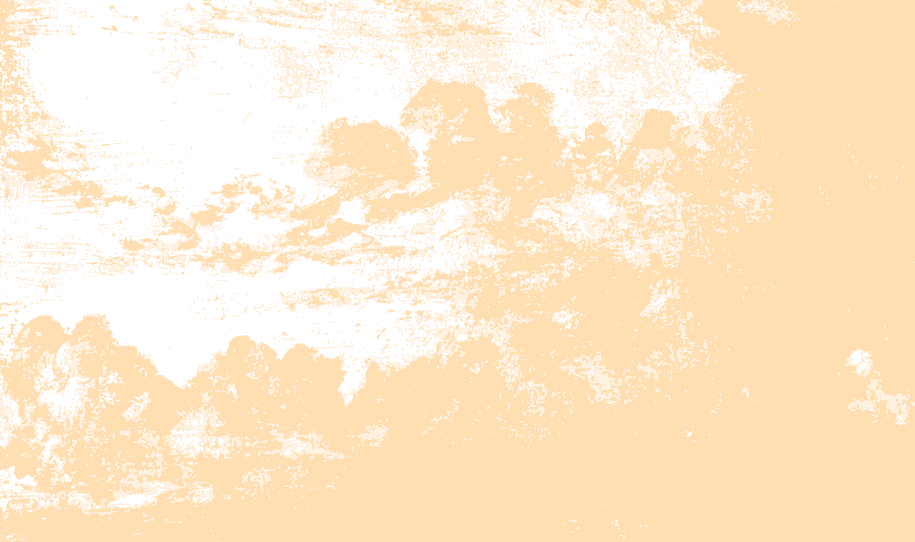
Yale Cloud Study capture Segmentation mask: the 58% of the capture read as opaque cloud
The capture-specific segmentation, 58% opaque cloud, drawn over the Yale capture. It measures paint, not the 1822 sky. S3
Case 03 / Same-day pair
Partially agrees

Yale B1981.25.116 + Courtauld P.1952.RW.69 / 21 September 1822

Two notes, one source

Claim. Constable’s Yale note at about 13:30 and Courtauld note at 15:00 give the same date, a southward view, an easterly wind, and warmth. S5 S7

Pushback. Both notes are by Constable, so their agreement is internal consistency rather than confirmation from another observer. S5 S8

Howard records NE for the day, while the regional model gives ENE at 57° near 13:00 and 54° at 15:00; no capture-to-capture cloud comparison has been performed. S3 S4 S8

Verdict. Inference: the easterly sector Partially agrees across the sources, but the shared date, view, and warmth remain unconfirmed by the comparison. S5 S8

No visual cloud-form agreement is claimed for the two paintings. S8
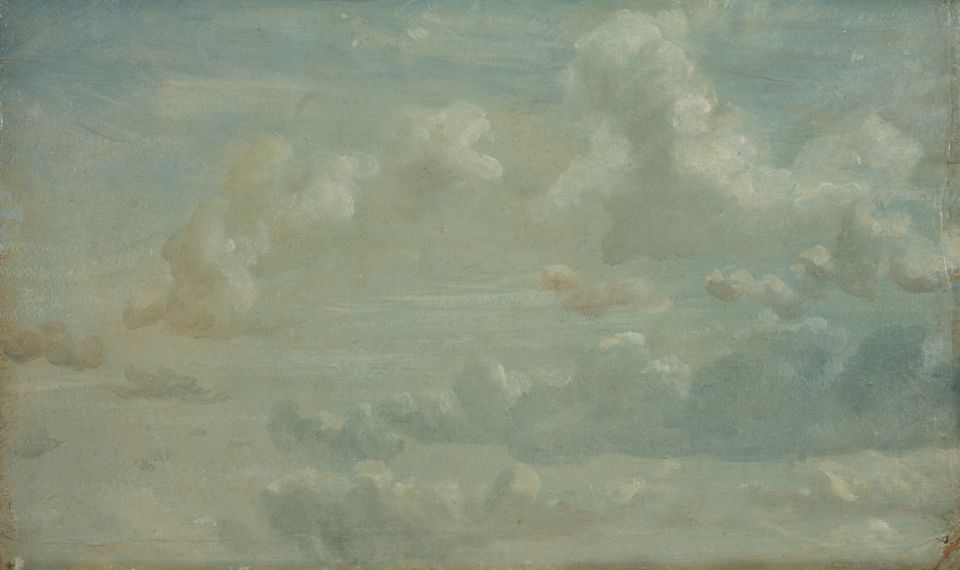
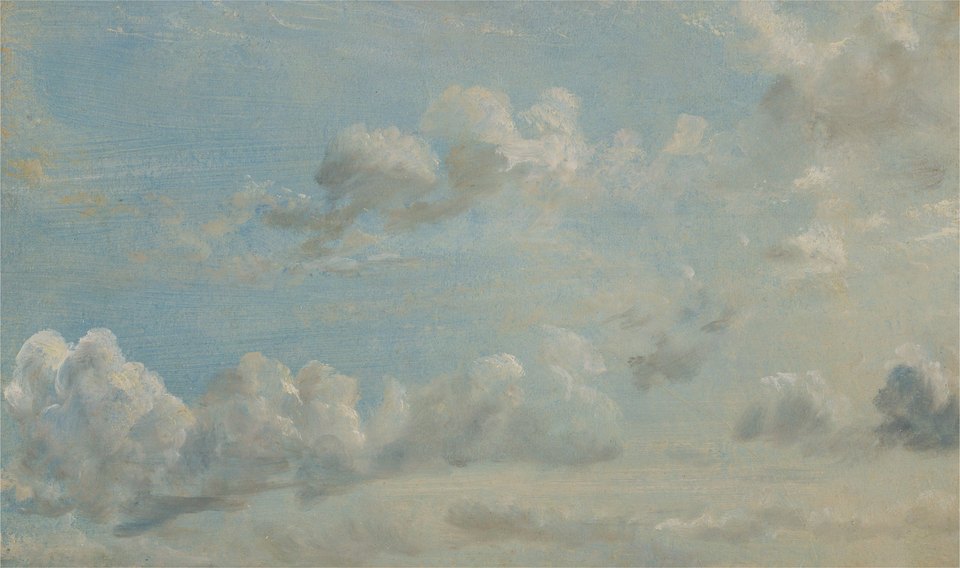
Yale at half past one, the Courtauld at three. Read together on one afternoon axis. Courtauld image CC BY-NC 4.0, image courtesy the Courtauld. S7
Case 04 / Impossible date
Contradicts

Ashmolean Museum / WA1933.7 / 1822

31 September

Claim. The inscription reads “31 Sep.r 10-11 o'clock morning looking Eastward a gentle wind to East,” and the Ashmolean catalogue identifies the date as Constable’s mistake and corrects it to 1 October 1822. S9

Pushback. Howard records NE and “Fine” on 30 September, then E and “Fine” on 1 October. S4 S10

Verdict. The literal date Contradicts the calendar; inference: the weather record is compatible with the museum’s correction but cannot choose between the neighbouring dates, so the exact day remains unresolved. S4 S9 S10

What changed: a catalogue correction remains a correction, not a date proved by weather. Open the full Nephos record. S9 S10 S14
Case 05 / Attribution
underdetermines

Tate / D12490 / Turner Bequest CLVIII 42 / c.1818

The limits of a red sky

Claim. Tate says the colours of Turner’s Study of the Sun Rising or Setting over a Landscape “may” reflect the unusual atmospheric conditions following the 1815 Tambora eruption. S11

Pushback. D12490 includes the solar disc, which Tate describes as a blank white disc low over the landscape, while the cited secondary-afterglow geometry (a second glow that can appear in the sky after sunset when volcanic haze is high in the atmosphere) occurs after the sun is below the horizon. S11 S12

Verdict. Inference: D12490 does not match that specific secondary-afterglow geometry; this does not rule out broader volcanic-aerosol effects, but the sheet alone cannot establish a link to Tambora. S11 S12 S13

The “may” hedge is retained. The packet does not turn a catalogue possibility into a finding. S11 S13
02 / Machine-readable

The same cases,
without the page.

Download the JSON companion. It carries the same five cases, object identities, verdicts, source locations, and record links. Image annotations (IIIF) were not produced for this packet. S1

03 / Sources

Follow every claim.

  1. The records published when this packet was written: the record index; Yale Center for British Art, B1981.25.116; The Courtauld, P.1952.RW.69; Ashmolean Museum, WA1933.7; Nephos, Turner Skies shorthand, 30 August 2026 (PDF), ten leaves from Tate's Skies sketchbook with sources; claims audited against the linked sources before release.
  2. Nephos machine record from before the page check: its reading of Howard’s wind for the 21st, made by machine text recognition (OCR), carried the caveat that it must be checked against the page image before it could be cited.
  3. Nephos verified machine record: Howard page-image check, wind comparison, capture segmentation, reanalysis values, uncertainty, and source queries.
  4. Luke Howard, The Climate of London, vol. III, Table CXCVI, p. 90: September 1822 register page.
  5. Nephos record: John Constable, Cloud Study, Yale B1981.25.116.
  6. NOAA Physical Sciences Laboratory: 20th Century Reanalysis v3 description.
  7. Courtauld Gallery: John Constable, Cloud Study, P.1952.RW.69, including the verso inscription.
  8. Nephos record: John Constable, Cloud Study, Courtauld P.1952.RW.69.
  9. Ashmolean collections API: John Constable, Study of Clouds, WA1933.7, inscription and catalogue correction.
  10. Luke Howard, The Climate of London, vol. III, Table CXCVII, p. 94: October 1822 register page.
  11. Tate Research Publication: J.M.W. Turner, Study of the Sun Rising or Setting over a Landscape, D12490.
  12. von Savigny et al. 2024: volcanic-aerosol sunset and secondary-afterglow geometry.
  13. Nephos, Turner Skies shorthand, 30 August 2026 (PDF), ten leaves from Tate's Skies sketchbook with sources; claims audited against the linked sources before release.
  14. Nephos record: John Constable, Study of Clouds, Ashmolean WA1933.7.