Art · Weather · Historical sources
A sky in paint.
A day in words.
Read them together.
How far do an artist’s written weather notes hold against independent records from the same day?
Read an artist’s words beside museum inscriptions, daily weather registers and letters about working outdoors. Follow each finding back to its evidence.
Explore the collections34 catalogue entries across 11 collections · 17 artwork records (3 with disputed dates) · 4 selected letters
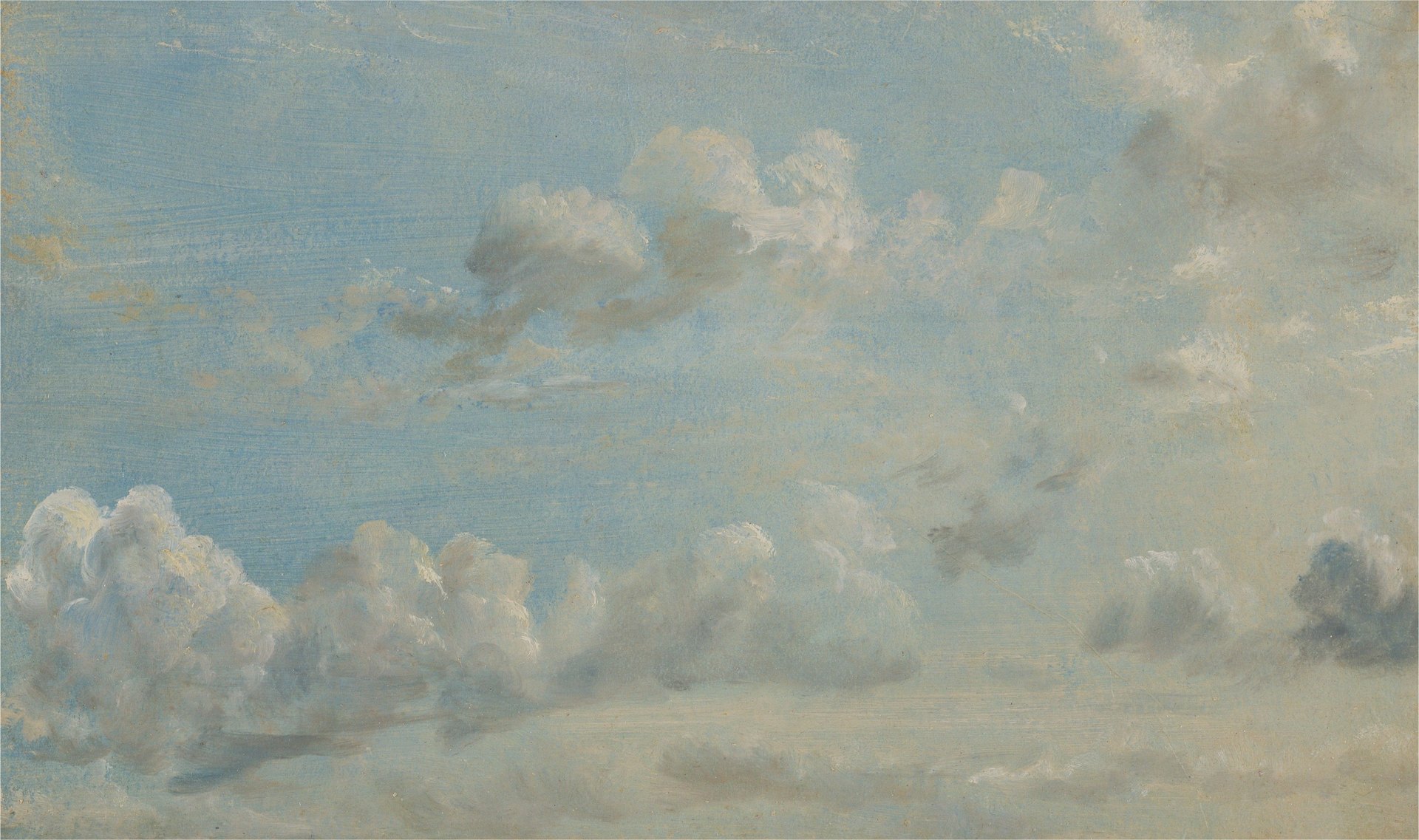
B1981.25.116 · Public domain, CC0
A first findingWind partially agrees with Howard and the reconstruction. Date, hour, view and warmth remain unknown: consistent where testable, untestable elsewhere.
Ninth Month, 1822, as Luke Howard printed it
Table CXCVI, The Climate of London, vol. III, p. 90. Page image · Transcription

| Day | 1 | 2 | 3 | 4 | 5 | 6 | 7 | 8 | 9 | 10 | 11 | 12 | 13 | 14 | 15 | 16 | 17 | 18 | 19 | 20 | 21 | 22 | 23 | 24 | 25 | 26 | 27 | 28 | 29 | 30 |
|---|---|---|---|---|---|---|---|---|---|---|---|---|---|---|---|---|---|---|---|---|---|---|---|---|---|---|---|---|---|---|
| Wind | NW | SW | NW | NW | SW | SW | NW | SW | W | NW | SW | NW | NE | E | E | NE | NW | NE | E | SE | NE | E | NE | NE | N | N | N | NE | NE | NE |
| Max °F | 71 | 71 | 73 | 71 | 73 | 72 | 68 | 69 | 66 | 69 | 73 | 64 | 64 | 67 | 62 | 70 | 77 | 70 | 66 | 68 | 65 | 58 | 64 | 60 | 59 | 63 | 58 | 58 | 62 | 68 |
| Min °F | 40 | 41 | 50 | 58 | 60 | 47 | 48 | 48 | 45 | 42 | 46 | 50 | 33 | 49 | 43 | 43 | 46 | 49 | 47 | 47 | 49 | 52 | 53 | 50 | 40 | 43 | 43 | 47 | 39 | 36 |
Notes. Ninth Mo. 1–7. Fine. 8. Cloudy: windy. 9, 10. Fine. 11. Cloudy: a little rain in the evening. 12. Fine. 13. Cloudy and fine. 14. Cloudy. 15. Cloudy: windy. 16. Overcast. 17–21. Fine. 22. Cloudy: windy: swallows begin to congregate. 23. Cloudy: rainy. 24. Rainy. 25. Fine. 26. Cloudy: fine. 27. Bleak. 28–30. Fine.
On the 21st Constable wrote wind very fresh at East on one sheet and brisk wind to east on the other. Howard's cell for the day reads NE. Neighbouring sectors, different places: that is the shape of most of what follows. Near-agreement is a finding, and so is a question left open.
In plain words
What Nephos asks, what it reads, and how it decides.
The question
When an artist wrote the weather on a painting, how far do independent sources from the same day support each word? Not whether the picture is “accurate”, which nothing can test, but whether the date, hour, wind and warmth he wrote down hold against records he never saw.
The sources
The museum's transcription of his note. Luke Howard's printed daily register for London. A modern weather reconstruction that used no painting. The Central England Temperature series. The sun's computed position for the stated hour and place.
How a verdict is reached
Each phrase of the note is one claim. Each source says what it can about that claim, and what it cannot. The verdict is one of four labels. A near value is not a match, two notes by one hand are not two witnesses, and a claim nothing can test stays open.
What has been found so far
- Partially agreesThe east wind Constable wrote sits beside Howard's northeast and the reconstruction's east-northeast: neighbouring sectors, different places, never a match.
- Unknown“Warm”, the hour and the southward view are consistent with the records but cannot be tested: no source measured his position, and a sky with no horizon gives the sun nothing to be checked against.
- ContradictsThe Ashmolean sheet's “31 September” cannot exist. The museum's 1 October is plausible and unproved: 30 September was fine too.
What this will not claim
That a weather cell about 111 by 68 kilometres speaks for a hilltop. That wide uncertainty rounds to certainty. That consistent numbers confirm a felt quality. That a painted cloud is a measurement of the atmosphere, or that Constable always painted exactly what was in front of him. The full list.
The register
Dated sky studies found in public collections, in date order.
The museum’s own transcription accompanies each dated study. Six of Yale’s sheets are shown here, in the order Constable dated them. Read the register
 1/2 p 5 AM · 19 July 1821
 one o’clock · 13 Sept 1821
 about from 2 to 3 afternoon · 25 Sept 1821
 10 morning · 27 Sept 1821
 11 o clock A.M. · 1 Aug 1822
 ½ p’s[t] one o clock · 21 Sept 1822
Yale Center for British Art, Paul Mellon Collection. Public domain images served from the museum's IIIF service.
The studies
Three starting points into the evidence.
Start with these three records, then explore all seventeen. The register lists the dated Constable sky studies found so far in public museum records, whether or not Nephos has read them yet.
| Inscribed | Sheet | Object | Artist's note | Nephos finding |
|---|---|---|---|---|
| 21 Sept 1822 |
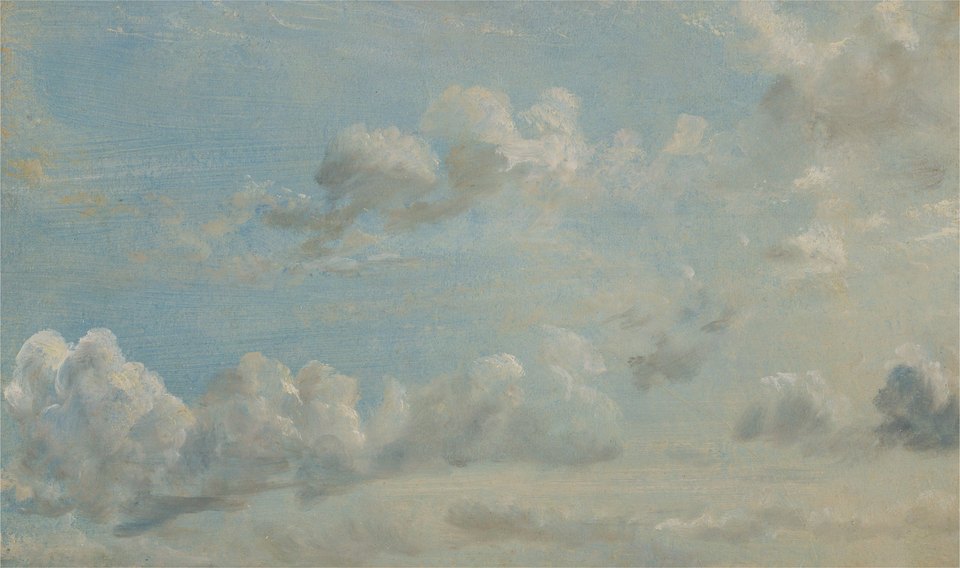 |
Cloud Study | “Sep[br] 21. 1822. | ½ p’s[t] one o clock. | looking south. | wind very fresh at East, but warm.” | Wind partially agrees with Howard and the reconstruction. Date, hour, view and warmth remain unknown: consistent where testable, untestable elsewhere. |
| 21 Sept 1822 |
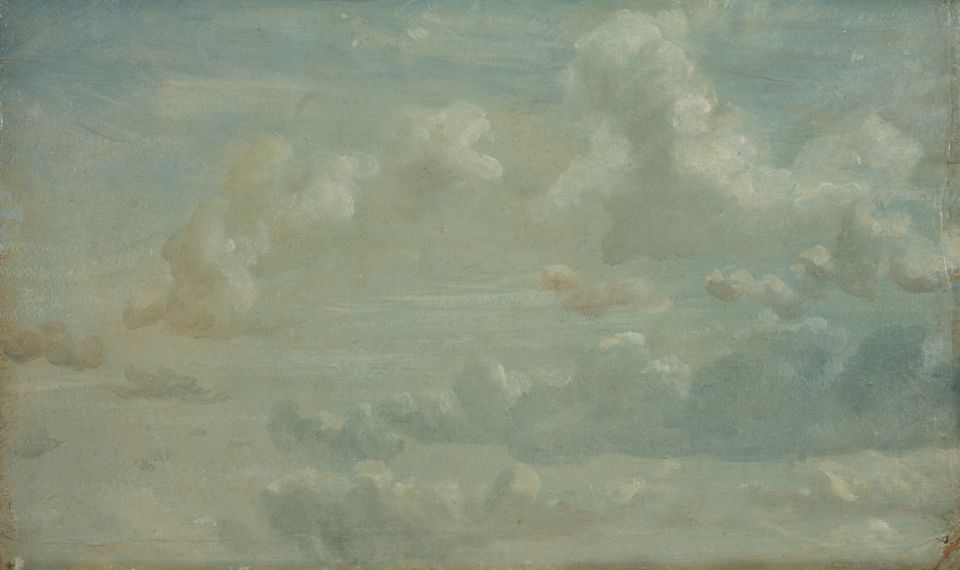 |
Cloud Study | “Sepr.21.1822. Looking South, brisk wind to east, warm and fresh. 3 o’cl. afternoon” | Agrees with the Yale note on date, view, wind and warmth, but both notes are Constable's: internal consistency, not a second witness. |
| 1822 |
Image at the museum | Study of Clouds | “31 Sep.r 10-11 o'clock morning looking Eastward a gentle wind to East” | The date contradicts the calendar. The museum's 1 October is compatible with Howard's east wind, but 30 September was fine too, so the day stays unresolved. |
Recent in the collections. Turner’s Whalley, from sketches to an interpretation; Van Gogh on painting in the wind.
Showing the working
Every reading keeps its history.
Nephos's first reading of Howard's day-21 wind came from optical character recognition of the scan and was marked provisional. Inspection of the page image on 18 August 2026 confirmed NE and made the source distance explicit: Howard's station was not Hampstead. The comparison, presented until then as agreement, was lowered to partial agreement. Both states are kept: the pre-verification machine record, the verified record and the page image are linked from the revision trail.
Where the record resists
Five cases where the evidence pushes back.
A source correction, an apparent numerical agreement inside wide uncertainty, two notes by one hand, an impossible date, and a Turner leaf whose red sky underdetermines a volcanic cause. Each keeps the claim, the pushback and the verdict together, on the page and as JSON.
What has already been done
Nephos follows earlier readers of these skies.
John Thornes compared the studies' weather notes with contemporary records in The Burlington Magazine in 1979 and catalogued them in John Constable's Skies (1999); the Yale sheet is his no. 52. Nephos adds a source-linked, claim-by-claim record that can be cited, corrected and read by machines. The bibliography lists the work it builds on.
For collection work and teaching
Bring an object. Bring a question. Or bring a correction.
Records carry a suggested citation, a printable summary, a JSON-LD document and, where the museum publishes a IIIF manifest, an annotation page that can attach the evidence to the museum's own image. New objects are assessed for source availability before anything is promised.