An arrangement chosen
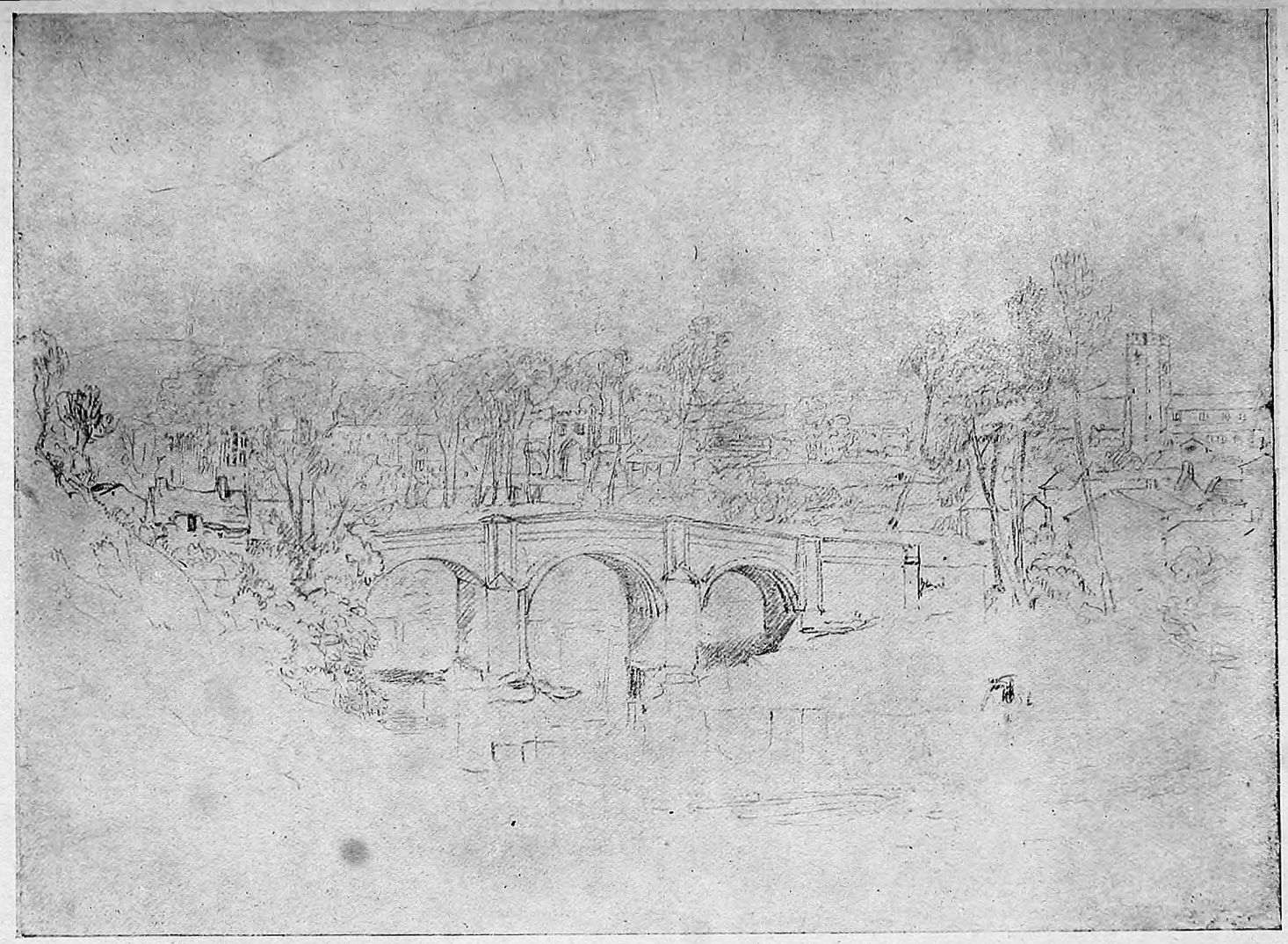
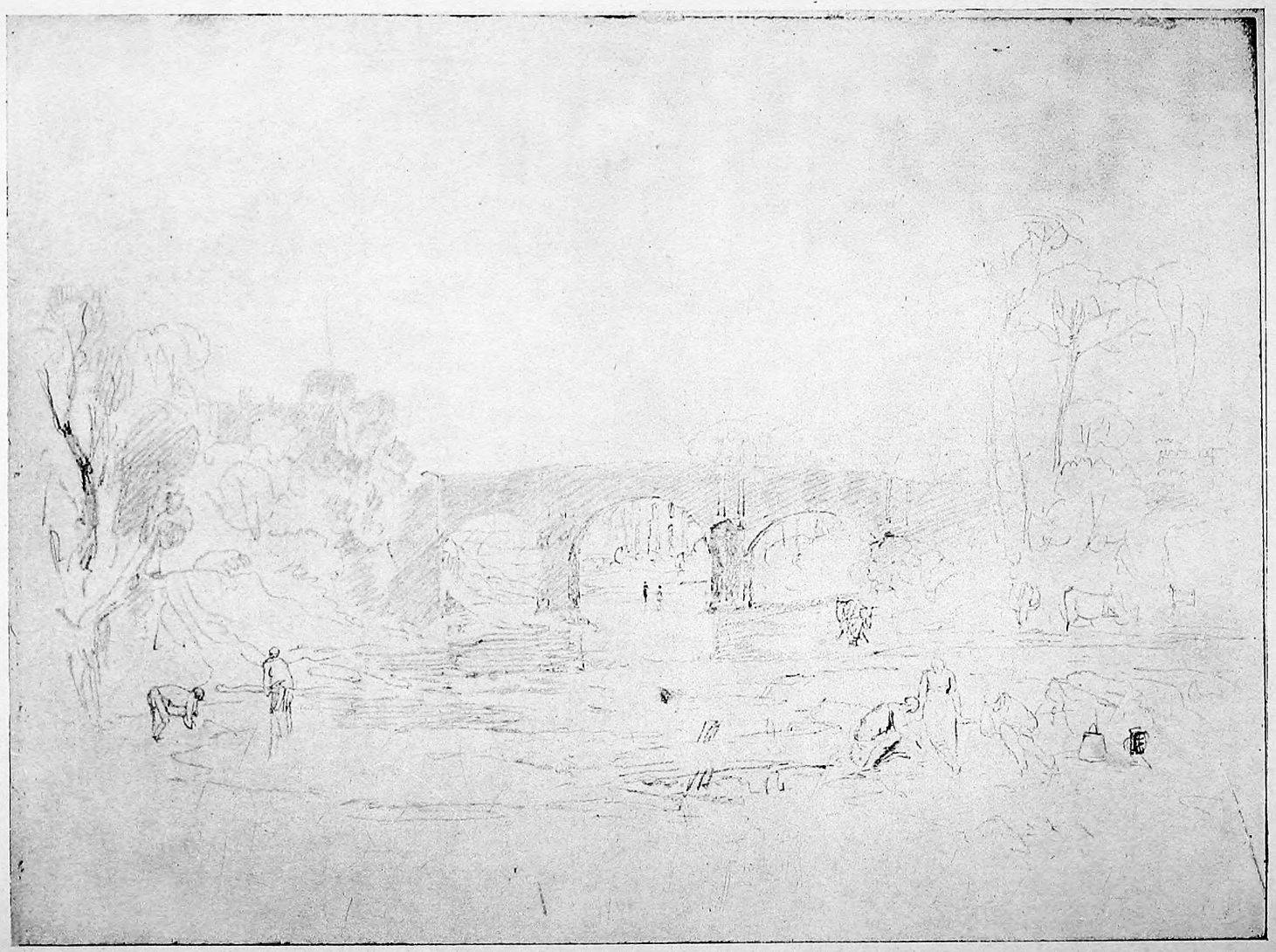
Finberg places the two pencil drawings in a sequence of artistic choices and connects the second with the oil exhibited in 1811. His account offers a composition to investigate. It does not document Turner’s actual decision in Turner’s own words.
Historical criticism · second edition, 1911
In the other drawing there is far less to occupy the attention. Here the interest is concentrated on a few simple forms. The mind is, therefore, thrown back on itself, and forced as it were to call up its own resources to amplify and fill out the painter’s forms. And this is the mood of poetic contemplation or meditation expressed in the beautiful picture of this subject which Turner exhibited in 1811, and which is now in Lady Wantage’s collection.
Read the surrounding paragraph
In the two drawings of Whalley Bridge here reproduced (Plates XXVIII. and XXIX. ) we see him searching for that aspect of the place which shall fit in or harmonise with the mood which was predominant in his own mind at this time. It is only from the point of view of such a subjective emotional attitude that the first drawing (Plate XXVIII. ) could have been rejected in favour of the second (Plate XXIX. ). As a representation of the actual place, the first drawing is much more adequate than the second. But it is evidently just this topographical and objective adequacy which constituted the defect of this fine drawing from Turner’s point of view. In the other drawing there is far less to occupy the attention. Here the interest is concentrated on a few simple forms. The mind is, therefore, thrown back on itself, and forced as it were to call up its own resources to amplify and fill out the painter’s forms. And this is the mood of poetic contemplation or meditation expressed in the beautiful picture of this subject which Turner exhibited in 1811, and which is now in Lady Wantage’s collection.
A. J. Finberg, Turner's Sketches and Drawings, 2nd ed. (London: Methuen, 1911), p. 63; plates XXVIII–XXIX. First published 1910.
Read the passage in its source ↗
This reading uses
Finberg’s sketch-to-painting connection.
What would advance it
A current catalogue entry identifying these exact sheets as studies for the oil would strengthen the connection. A different identification would require this sequence to be revised.
A light with a history
The museum offers an artistic context for the light. That invites comparison with Cuyp’s paintings and Turner’s discussion of them. Resemblance alone does not show which effects Turner observed at Whalley or precisely how he made this canvas.
Museum interpretation
the light and serene, tranquil atmosphere in this work by the English artist are highly reminiscent of Cuyp.
Dordrechts Museum, “Turner, a new acquisition,” acquisition article and image caption; accessed 13 September 2026.
Read the passage in its source ↗
This reading uses
The museum’s Cuyp interpretation.
What would advance it
An exact passage from Turner’s lecture, read alongside a named Cuyp painting, would make the proposed influence more specific. It would still need an argument connecting it to this work.
An atmosphere constructed
The sketches raise questions about arrangement; the museum’s account raises questions about a tradition of light. Together they offer two ways into the making of this atmosphere. They do not establish a single cause, exclude direct observation, or recover weather on a particular day. This is a synthesis of existing scholarship, not a new attribution.
Historical criticism · second edition, 1911
In the other drawing there is far less to occupy the attention. Here the interest is concentrated on a few simple forms. The mind is, therefore, thrown back on itself, and forced as it were to call up its own resources to amplify and fill out the painter’s forms. And this is the mood of poetic contemplation or meditation expressed in the beautiful picture of this subject which Turner exhibited in 1811, and which is now in Lady Wantage’s collection.
Read the surrounding paragraph
In the two drawings of Whalley Bridge here reproduced (Plates XXVIII. and XXIX. ) we see him searching for that aspect of the place which shall fit in or harmonise with the mood which was predominant in his own mind at this time. It is only from the point of view of such a subjective emotional attitude that the first drawing (Plate XXVIII. ) could have been rejected in favour of the second (Plate XXIX. ). As a representation of the actual place, the first drawing is much more adequate than the second. But it is evidently just this topographical and objective adequacy which constituted the defect of this fine drawing from Turner’s point of view. In the other drawing there is far less to occupy the attention. Here the interest is concentrated on a few simple forms. The mind is, therefore, thrown back on itself, and forced as it were to call up its own resources to amplify and fill out the painter’s forms. And this is the mood of poetic contemplation or meditation expressed in the beautiful picture of this subject which Turner exhibited in 1811, and which is now in Lady Wantage’s collection.
A. J. Finberg, Turner's Sketches and Drawings, 2nd ed. (London: Methuen, 1911), p. 63; plates XXVIII–XXIX. First published 1910.
Read the passage in its source ↗
Museum interpretation
the light and serene, tranquil atmosphere in this work by the English artist are highly reminiscent of Cuyp.
Dordrechts Museum, “Turner, a new acquisition,” acquisition article and image caption; accessed 13 September 2026.
Read the passage in its source ↗
This reading uses
Finberg’s sketch-to-painting connection, The museum’s Cuyp interpretation.
What would advance it
The strongest next addition is an object-specific link: a verified sketch identification, a relevant statement by Turner, or technical evidence about revisions to this painting. Another weather series would not by itself establish those links.